Introduction: Why the Glamping Economy Matters Today
The glamping economy has quietly but powerfully reshaped the global travel industry. What once began as a small niche for travelers who wanted “camping with comfort” has now become a serious economic force within hospitality. Today, glamping blends luxury travel, sustainability, experiential tourism, and rural economic development into one fast-growing market.
Travelers are no longer satisfied with standard hotel rooms alone. Instead, they seek unique, meaningful, and nature-connected experiences—without giving up comfort. Because of this shift, glamping has moved from the fringes of tourism into the mainstream, attracting entrepreneurs, investors, landowners, and even major hospitality brands.
This in-depth guide explains what the glamping economy is, why it is growing so fast, how it makes money, and where it is heading next—all optimized to rank on Google and answer real user search intent.
What Is the Glamping Economy?
The glamping economy refers to the complete commercial ecosystem built around glamorous camping. Instead of traditional tents and shared facilities, glamping offers hotel-level comfort in outdoor settings. Guests stay in accommodations such as luxury tents, domes, cabins, treehouses, yurts, A-frames, and RVs—often with private bathrooms, real beds, climate control, and carefully curated interiors.
From an economic perspective, the glamping economy extends far beyond accommodation alone. It includes:
- Land development and land-use optimization
- Construction and modular design
- Interior styling and guest experience design
- Hospitality operations and guest services
- Wellness activities and food experiences
- Marketing, branding, and digital platforms
- Local tourism services and employment
Together, these components create a hospitality sub-sector that earns higher nightly rates than traditional camping, yet remains more flexible and cost-efficient than many hotels.
Why the Glamping Economy Is Growing So Fast
A New Definition of Luxury Travel
Luxury travel has changed. Modern travelers increasingly define luxury as space, privacy, authenticity, and experience, rather than chandeliers and concierge desks. Glamping fits this definition perfectly. Guests enjoy silence, scenic views, and immersion in nature—while still sleeping in comfort.
This shift has helped the glamping economy move from novelty status into mainstream luxury tourism, especially among millennials, Gen Z, digital nomads, and wellness-focused travelers.
Experience-Driven Travel Demand
Travelers today value experiences over possessions. A night in a glass dome under the stars or a secluded cabin with a private hot tub creates memories worth sharing. Social media amplifies this effect, as visually stunning glamping stays generate organic exposure and free marketing.
As a result, glamping properties often enjoy high demand at premium prices, especially when they offer a strong sense of place and storytelling.
Sustainability and Eco-Conscious Choices
Sustainability is no longer optional—it is a core driver of demand. Many glamping operations use:
- Solar or renewable energy
- Off-grid or low-impact infrastructure
- Composting or eco-friendly waste systems
- Locally sourced materials and food
For travelers, the glamping economy offers a way to enjoy luxury without environmental guilt. For operators, sustainability becomes a competitive advantage and a powerful brand differentiator.
Flexibility and Lower Barriers to Entry
Compared to hotels, glamping developments are often faster to launch and cheaper to scale. Modular structures, RVs, and tents allow operators to test demand, expand gradually, or relocate if needed.
This flexibility has opened the door for:
- Individual entrepreneurs
- Farmers and rural landowners
- Small investment groups
- Hospitality brands exploring outdoor concepts
The glamping economy thrives because it allows experimentation without massive upfront risk.
The Economics Behind the Glamping Economy
Revenue Potential in the Glamping Economy
Glamping accommodations typically command higher nightly rates than standard vacation rentals. Pricing depends on location, design, amenities, and seasonality, but premium experiences often outperform traditional lodging on a per-unit basis.
Because glamping sites usually operate with fewer units, operators focus on quality, exclusivity, and experience, rather than volume. Strong occupancy during peak seasons can generate impressive annual revenue from a relatively small footprint.
Profit Margins and Cost Structure
The glamping economy benefits from a leaner cost structure than hotels. There is usually less staffing, smaller buildings, and lower energy usage. When managed well, this leads to attractive profit margins.
However, success depends on:
- Smart pricing strategies
- Consistent maintenance
- Excellent guest communication
- Professional branding and photography
Glamping is not passive income. It is an active hospitality business that rewards attention to detail.
Rural and Local Economic Impact
One of the most powerful aspects of the glamping economy is its effect on rural communities. Underused land becomes a valuable asset, while local economies benefit from:
- Job creation
- Local food sourcing
- Guided activities and tours
- Increased tourism spending
For farmers and landowners, glamping offers diversification without replacing traditional livelihoods. This makes the glamping economy both financially and socially impactful.
Design and Experience Trends Shaping the Glamping Economy
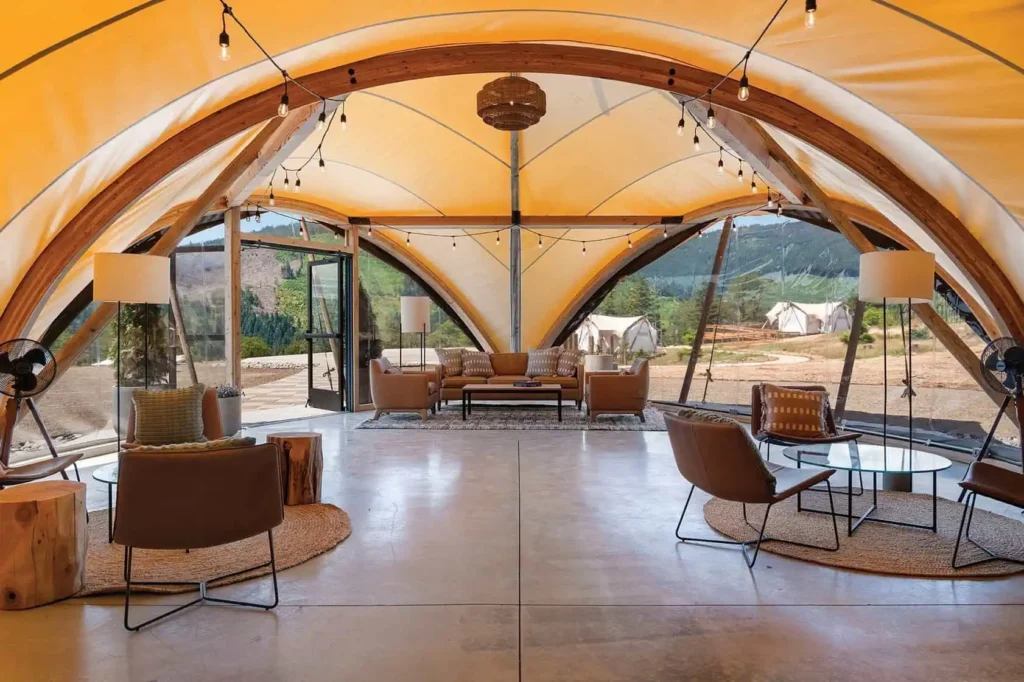
Immersive and Nature-First Design
Modern glamping emphasizes harmony with the environment. Successful properties blend architecture with landscape, using natural materials, panoramic windows, and outdoor living areas.
The goal is not only comfort, but emotional connection to place—a key driver of repeat bookings and positive reviews.
Wellness-Centered Glamping Experiences
Wellness tourism plays a major role in the glamping economy. Popular features include:
- Yoga decks and meditation spaces
- Forest bathing and nature walks
- Saunas and hot tubs
- Locally sourced, healthy meals
Guests increasingly choose glamping for mental clarity, rest, and reconnection—making wellness a powerful revenue driver.
Smart but Subtle Technology
Although guests want to disconnect, they still expect reliability. The best glamping operations integrate technology quietly, offering:
- Strong Wi-Fi
- Climate control
- Smart locks and lighting
When done right, technology enhances comfort without disrupting the natural atmosphere.
Challenges Facing the Glamping Economy
Despite rapid growth, the glamping economy faces several challenges:
Seasonality
Many glamping destinations rely heavily on peak travel months. Operators must plan financially to handle quieter seasons and weather-related fluctuations.
Regulation and Zoning
Land-use laws, permits, and safety regulations vary widely. Navigating compliance is often one of the biggest hurdles for new operators.
Environmental and Climate Risks
Extreme weather, wildfires, and climate change require resilient design, proper insurance, and long-term planning.
Market Saturation
As glamping becomes more popular, competition increases. Success depends on clear differentiation, strong branding, and exceptional guest experience.
The Future of the Glamping Economy
Looking ahead, the glamping economy is expected to continue expanding and maturing.
Mainstream Luxury Adoption
Outdoor hospitality is becoming a recognized luxury category alongside hotels and resorts. Travelers increasingly expect glamping to deliver premium service and design.
Increased Investment and Brand Entry
Institutional investors and major hospitality brands are entering the space, signaling long-term confidence in the glamping economy.
Stronger Local and Cultural Integration
Future glamping sites will focus more on regional identity—local architecture, traditions, and cuisine—creating deeper connections between guests and destinations.
Data-Driven Operations
Operators are increasingly using data to optimize pricing, amenities, and guest experiences, making the glamping economy more professional and scalable.
FAQ: The Glamping Economy
The glamping economy is the commercial market built around luxury outdoor accommodations that combine nature with hotel-level comfort.
Yes, when managed professionally, glamping can generate strong revenue and attractive profit margins due to premium pricing and lower operating costs.
Growth is driven by experience-focused travel, sustainability, flexible business models, and a new definition of luxury centered on nature and privacy.
Yes. Modern glamping is increasingly viewed as a form of luxury travel that emphasizes experience, wellness, and exclusivity.
The glamping economy is expected to expand further, attract more investment, and become a permanent part of the global luxury travel industry.
Conclusion: Why the Glamping Economy Is Here to Stay
The glamping economy represents a fundamental shift in how people travel and how hospitality is built. By combining luxury, sustainability, and immersive experiences, it has unlocked new value for travelers, entrepreneurs, and rural communities alike.
Its steady rise reflects changing consumer values and a desire for meaningful, nature-connected luxury. As travel continues to evolve, glamping stands out not as a passing trend, but as a long-term reimagining of what luxury travel can be—one where nature is not escaped, but embraced.